Do soundproof panels block noise or just cut echo
Soundproof panels cut echo inside a room but do not block noise through a wall. See what panels do, where to place them and what really keeps noise out.
Filed by Jess Underhill 7 min
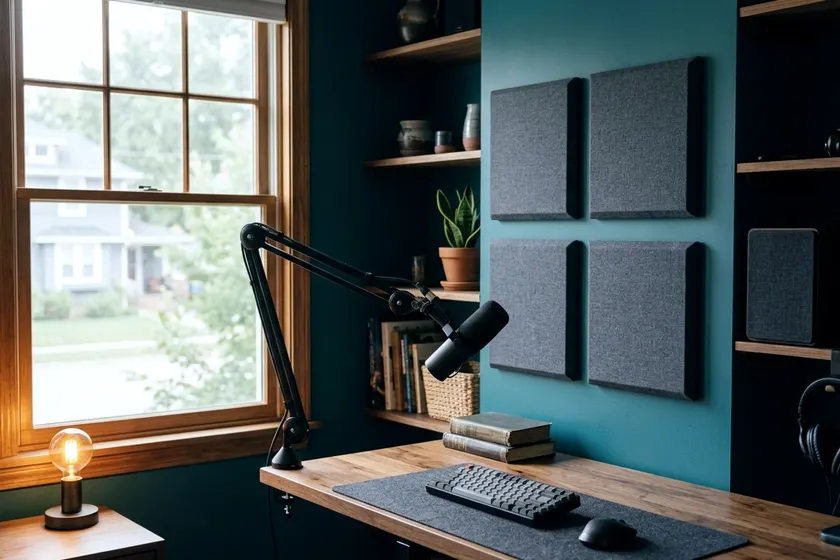
Soundproof panels only cut echo inside a room. They absorb sound waves that bounce off hard surfaces, but they lack the heavy mass required to block noise from passing through a wall. If you hear traffic or loud neighbors, soft foam panels will not stop the noise.
What acoustic panels do to sound inside a room
Foam and fabric panels tame audio reflections. Sound waves leave your mouth and hit the flat surfaces in your room. Drywall and hardwood floors bounce that energy back. This bouncing creates an echo that makes speech hard to understand and music sound muddy.
Acoustic panels catch those bouncing waves. Soft materials turn sound energy into a tiny bit of heat. The wave hits the foam and stops before it can bounce back to your ears. You use these products to tune the room so it sounds pleasant.
Acoustic performance is measured by how much energy a material catches. The General Services Administration defines the noise reduction coefficient (NRC) as a single number rating of how much sound a material absorbs, averaged across 250, 500, 1000 and 2000 Hz. You can find this standard in their sound guidelines. A higher rating means the panel absorbs more sound across those frequencies.
This absorption keeps your home office from sounding hollow and helps video calls come through clearly. You can buy premade foam wedges or build wooden frames filled with dense insulation. If you want to make DIY acoustic panels, a thick core of mineral wool works well. Wrap the frame in breathable fabric so the sound can reach the wool inside.
Different materials handle different frequencies. Thin foam catches high pitches like a clapping hand. Thicker panels filled with heavy fiberglass catch lower pitches like a deep speaking voice.
Absorption fixes the space you are sitting in. It stops sound from bouncing from wall to wall. It does not trap sound in the room. It also does not keep outside noise from getting inside.
Why panels barely stop noise from next door
Sound waves travel right through light materials. Porous foam catches an echo well. It does nothing to stop a leaf blower outside. Blocking noise requires heavy mass and airtight seals.
Noise from next door vibrates the drywall on the shared wall. The wall then vibrates the air inside your room and pushes the noise to your ears. A lightweight foam square glued to the wall cannot stop a heavy sheet of drywall from moving. The sound simply passes right through the foam itself.
The standard for blocking noise relies on a completely different measurement. The GSA defines sound transmission class (STC) as a single number laboratory rating of how well a wall, ceiling or floor blocks sound between two spaces, calculated under ASTM E413. Their design guide outlines how buildings use heavy materials to block noise.
A standard interior wall with one thin layer of drywall on each side often performs poorly. Loud speech can usually be heard through it. Putting foam on that wall will not increase its ability to block speech. You need density to stop sound waves.
The GSA guide sums up noise control as absorb, block and cover. Panels handle the absorb step, while thick walls and solid doors handle the block step. Background noise handles the cover step. You cannot substitute absorption for blocking, so if you want a quiet room, build a thick barrier.
When panels are the right fix for calls and recording
Acoustic panels work well when you control the noise source. You need them when your own voice sounds harsh on a microphone. They also help a home theater system sound crisp.
Bare rooms create a harsh sound. A thick rug helps a little. Sound still bounces between parallel walls. You can fix this by adding soft materials to the walls and ceiling.
For a video call, acoustic panels help keep your microphone from picking up your voice twice. The first sound goes straight from your mouth into the mic. The second sound bounces off the bare drywall behind your monitor and hits the mic a split second later. Panels on the wall cut down that second sound.
The same rule applies when you set up a home theater. The speakers push loud effects toward the seating area. If that sound bounces off the side walls, it blurs the dialogue.
You also need absorption in a dedicated game room. Fast games have loud sound effects. If you have hard surfaces in the room, the noise becomes overwhelming. Soft acoustic materials make the room comfortable for long sessions.
Panels also calm mechanical noises inside the room. A loud computer fan produces a steady hum. Acoustic foam will not silence the fan entirely. It stops the hum from bouncing off the corners and multiplying.
Where to place panels for the most effect
You do not need to cover every square foot of your wall. Strategic placement gives you the best results. You want to catch the sound waves before they reach your ears.
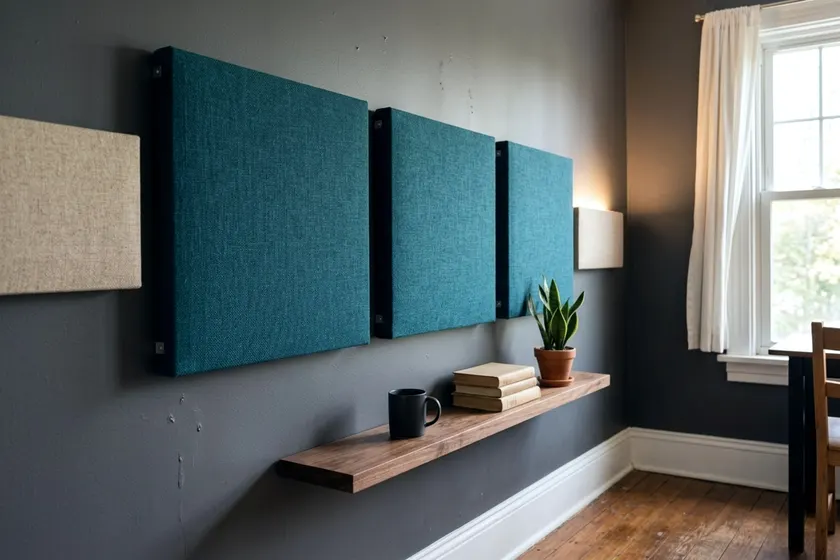
Start with the first reflection points. These are the spots on the side walls where sound bounces once before hitting you. You can find them with a simple method.
- Sit in your main office chair or theater seat facing your screen.
- Have a friend slide a small hand mirror flat along the left wall.
- Stop them when you can see the speaker reflected in the mirror.
- Mark that spot on the wall with a piece of painter tape.
- Repeat the process on the right wall.
Mount an acoustic panel directly over each mark. You want a panel large enough to cover the whole reflection area at head height.
The wall directly behind your desk is the next target. Place one or two panels exactly at the height of your mouth. This catches the sound of your voice before it bounces back. If you record podcasts, place another panel directly behind your chair.
Corners trap low bass frequencies. Thick corner wedges help balance the heavy rumble from a subwoofer. Put these floor to ceiling if your budget allows.
Ceilings also reflect sound. If you have hardwood floors, the sound will bounce vertically. Hanging a soft panel flat above your desk can cut this echo if it is anchored securely to the ceiling joists.
What to do instead when noise comes through the wall
You need heavy materials to stop outside noise from entering your room. You also need to seal every air gap. Sound leaks through the smallest hole.
Start with the doors. Interior doors usually have a large gap at the bottom for airflow. They also have hollow cores that do not block sound. You will need to soundproof a hollow door before touching the walls.
Replace a hollow door with a solid wood door. Add thick weatherstripping around the sides and top. Install an automatic door sweep at the bottom. The sweep drops a tight rubber seal to the floor when the door closes.
Check your windows next. Older glass panes let street noise pour right in. You can add window inserts, which are custom glass panels that press tight into the window frame inside your room. They create an air space that helps reduce noise.
If noise comes straight through the drywall, you have to add mass. One effective method is hanging a second layer of drywall. You glue a new sheet of thick drywall directly over the existing wall using acoustic damping compound.
The compound stays flexible. When sound vibrations hit the new drywall, the flexible glue turns the vibration energy into heat. This stops the sound from vibrating the wooden studs behind the wall. You will need to pull off the baseboards, and extending the electrical outlets is a job for a licensed electrician.
Look for air gaps around outlet boxes. Turn off the breaker for that circuit, then pull the plastic covers off. Fill the gaps between the box and the drywall with acoustic caulk. This stops noise from leaking through the small holes cut for your switches.
If you have a drop ceiling, noise might travel over the top of the walls. You can lay dense acoustic batts over the ceiling tiles to add mass if the ceiling grid can carry the weight. Make sure the batts fit tight against the wall studs.
Save the soft foam and fabric panels for making the room sound good once the outside noise is gone.