How to soundproof a door that lets every sound through
Learn how to soundproof a door by sealing air gaps, installing a drop seal, and upgrading to a solid core door to keep unwanted noise out of your room.
Filed by Jess Underhill 8 min
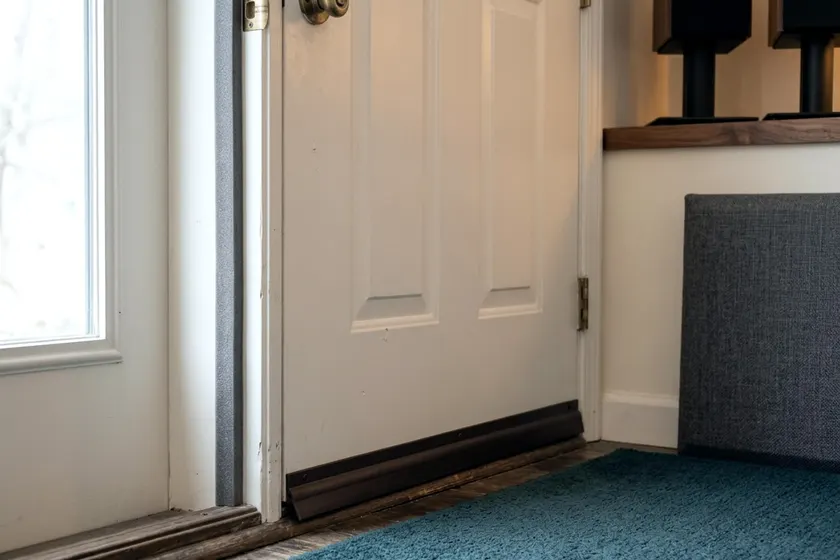
To stop noise from coming through an interior door, you must seal the air gaps around the edges and ensure the door itself is dense. You can block sound by installing continuous gaskets and a door sweep. If the frame modifications fall short, you can upgrade to a solid core slab.
Check if your door is hollow or solid
You need to know what kind of door you have before you spend money on materials. Knock on the center of the door panel. A hollow core door sounds like a drum and echoes in the room. A solid door produces a dull thud and feels heavy when you swing it.
Many homes use hollow interior doors for bedrooms and home offices because they cost less and weigh less. Hollow doors tend to let sound through. The thin outer layers catch vibrations from the hallway and pass them through the empty space inside.
A guide from the US General Services Administration rates hinged doors with a solid or insulated core as potentially very good for acoustics and hollow core doors as only good to poor. If your door is hollow, sealing the edges will help. You will still hear loud talking through the wood itself.
The hollow door consists of a softwood frame around the perimeter, a cardboard honeycomb center, and a thin wood veneer.
Block sound under the door with a sweep or drop seal
The largest air gap on any interior door sits right at the bottom. Sound travels through the air. Any gap that lets light pass through can also let noise pass into your room. Check the space between the bottom of the door and the floor.
Most interior doors have a gap at the floor to clear carpets and rugs. You need to close off this space. The federal guide says the gap under a door should be shielded with a sweep or drop seal gasket.
A basic door sweep screws into the bottom edge of the door and brushes against the floor. Sweeps cost very little and take just a few minutes to install. You cut the metal strip to length with a hacksaw, line it up, and drive in the screws.
Sweeps do have a downside. The rubber skirt drags on thick carpets and can wear out over time. A drop seal usually seals better against sound. This mechanism attaches to the bottom of the door and holds a rubber gasket inside a metal housing.
When you close the door, a small metal plunger presses against the door frame. The pressure forces the gasket down against the floor to create a tight seal. When you turn the knob to open the door, the gasket springs back up inside its housing. This prevents the rubber from scraping across your floor.
You can buy surface-mounted drop seals that screw directly onto the face of the door. Measure the width of your door, cut the drop seal housing to match, and screw it to the bottom edge. A flush-mounted version requires routing a deep channel into the bottom edge of the wood. The hidden version looks cleaner, but it requires a router and a steady hand.
Seal the frame on three sides with an acoustic gasket
Closing the gap at the bottom solves one part of the problem. You still have gaps running up both sides and across the top of the frame. The door rests against a narrow strip of wood called the door stop. You need to fill the space between the door face and this stop.
The federal guide calls for a continuous closed cell foam perimeter seal on three sides of the door. Closed cell foam blocks air and sound better than open cell foam. Open cell foam is porous and generally seals less well.
You will apply the adhesive gasket directly to the door stops. Wipe down the stops with rubbing alcohol and a rag. The alcohol removes grease and dust so the adhesive will stick properly. Measure the width of the top stop and cut your gasket to fit.
Peel the backing off the foam a small section at a time. Press the foam firmly into the corner where the stop meets the jamb. Run one continuous strip down the hinge side, one across the top, and a third down the handle side. Do not stretch the foam as you press it in place.
Stretched foam will shrink over time and pull away from the corners. This leaves gaps for sound to leak through. To check your work, turn off the lights in your room and ask someone to stand outside with a bright flashlight. If you see light shining through the edges, you have a gap that needs more foam.
Adjust the strike so the door presses into the seals
Once you apply the foam gaskets around the frame, your door might not latch. The new rubber or foam takes up space. This pushes the door away from the latch mechanism. You need to adjust the metal strike plate on the door frame.
Gather these tools before you start adjusting the frame:
- A wood chisel with a narrow blade
- A lightweight hammer
- A screwdriver
- Wooden toothpicks and wood glue
- A cordless drill with a small pilot bit
Open the door and locate the strike plate. Remove the screws holding it in place. You need to move the plate slightly closer to the stops. This forces the door to compress the foam gaskets when the latch clicks into place.
Use the wood chisel to carve out a small sliver of wood behind the strike plate. Tap the back of the chisel lightly with the hammer to shave away the wood. You might also need to drill new pilot holes for the screws.
Fill the old holes with wooden toothpicks and wood glue so the screws have something solid to bite into. Replace the plate and test the door. It should require a firm push to click closed. A tight fit helps create the unbroken seal that soundproofing a door depends on.
Swap to a solid core door when seals are not enough
Adding seals can cut down higher frequencies and quiet conversations in the hallway. If you still hear television noise or heavy footsteps, the hollow door itself is the weak point. The best way to soundproof a door at this stage is to replace it entirely.
Replacing a hollow slab with a solid one is an effective way to soundproof a room. Solid core doors look exactly like regular interior doors, but the inside is packed with dense engineered wood or fiberboard. This extra mass helps block sound instead of vibrating like a drum.
A solid core slab weighs much more than a hollow version of the same size. Measure your existing door carefully before you go to the hardware store.
Before you buy a solid core door, write down these measurements:
- The exact width of the existing door slab
- The exact height of the existing door slab from top to bottom
- The thickness of the door wood
- The distance from the top of the door to the top of each hinge
- The distance from the top of the door to the center of the doorknob hole
You can buy a blank solid slab and cut the hinge mortises yourself, or you can order a pre-hung door attached to a new frame. Tearing out the old frame and installing a pre-hung unit can take a weekend. It also helps the door hang square.
If you keep your existing frame and hang a new slab, you will need a helper. Solid core doors are heavy and difficult to maneuver. You must support the weight on wooden shims while you align the hinges.
Check your existing hinges before you hang the new slab. A hollow door usually hangs on standard hinges. A heavy solid door may need extra hinges to prevent sagging, so check the manufacturer's instructions. You might need to use a router to cut an extra hinge mortise into your existing frame.
Add a heavy curtain or panel for extra quiet
Sometimes a new door is not an option. If you rent an apartment or have a tight budget, you can add mass to the existing door without removing it from the hinges. A heavy curtain over the door may help a little, but results vary.
Hang a sturdy curtain rod above the door frame. The curtain must extend past the edges of the frame on all sides and drag slightly on the floor. When you want to work or watch a movie, you pull the heavy fabric across the closed door. This creates a secondary barrier that traps sound.
For a more permanent fix, mount a rigid panel directly to the back of the door. A sheet of medium density fiberboard adds valuable mass to a hollow core. You can also make DIY acoustic panels using rigid fiberglass insulation and a wooden frame.
Screw the panel into the solid wood perimeter of the door. The hollow center will not hold a screw. You can also hang mass loaded vinyl over the back of the door. This heavy rubber material adds mass that can reduce low frequency noise.
Mass loaded vinyl is heavy. Cut a sheet to match the exact dimensions of your door slab.
Remove the doorknob, lay the vinyl flat against the wood, and secure it with screws and wide metal washers. Start at the top and work your way down. Cut a round hole for the knob and reinstall the hardware. The vinyl adds weight quickly, so check that your hinges are tight before you start.