9 ways to soundproof a room you work in
Learn how to soundproof a room you work in, from cheap door gap seals and heavy rugs to adding drywall and decoupling walls for better focus.
Filed by Jess Underhill 6 min
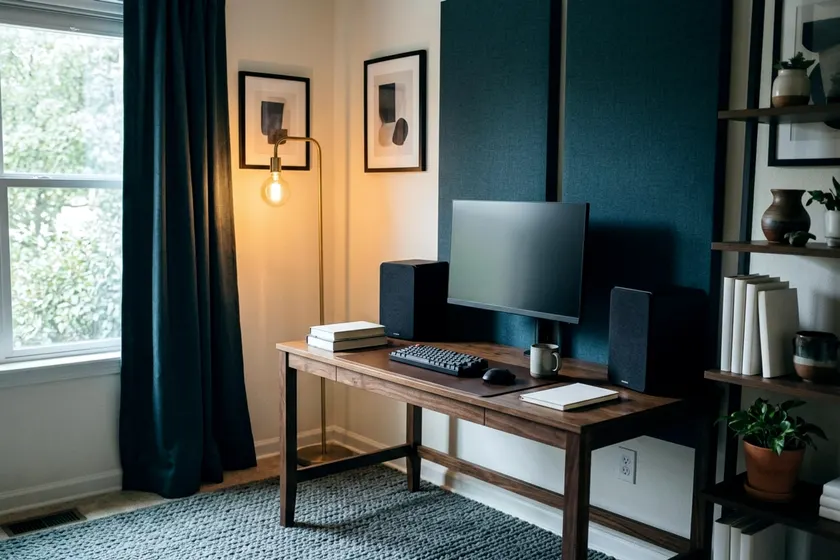
Learning how to soundproof a room starts with sealing air gaps around doors and windows, followed by adding mass to the walls and floors. Simple fixes can reduce everyday household noise reaching your desk. For loud sounds, you will need to add heavy materials like drywall to physically block the noise.
1. Find where the noise is getting in
Before you buy materials, you need to know how sound behaves. The GSA guide sums up noise control as absorb, block and cover. Absorbing stops echo inside the room, while blocking stops noise from passing through walls. Covering adds background noise to mask distractions.
Look for air gaps, because if air can enter the room, sound will follow right behind it. Turn off the lights during the day and look for sunlight shining around window frames. Have someone shine a flashlight around the closed door from the hallway. Those bright spots are your first targets.
Check your air conditioning vents. Metal ductwork can carry voices from the living room to your office. Do not block or seal the vents, since the system needs airflow, and ask an HVAC professional about quieting the duct.
2. Seal gaps around the door first
The cheapest step is fixing your interior door. Many interior doors have a hollow core and block little noise. The large gap at the bottom lets the rest of the sound pass through freely.
The NIDCD puts normal conversation at 60 to 70 dBA. You may hear most of it from the kitchen if the door leaks sound.
Install a thick rubber door sweep on the bottom edge, screwing the metal bracket into the wood so the rubber fins press firmly against the floor. Add weatherstripping tape around the door frame where the door meets the jamb. If you still hear loud noise, you will need to upgrade the door itself.
3. Add a heavy rug and pad on hard floors
Hardwood and tile floors bounce sound around your room. They also transmit impact noise from the floor above or below. A rolling office chair on bare wood sends loud scraping sounds through the ceiling below you.
Lay down a thick area rug over the hard surface. Place a dense rubber underlayment pad beneath the rug. You want a heavy pad to absorb the most sound.
The rubber pad absorbs the impact of footsteps and dropping items. It will not block loud music, but it softens the clatter of a busy house. Cover as much floor space as you can.
4. Hang dense curtains over windows
Glass is a weak point for outside noise. A standard window pane lets traffic sounds and lawnmowers bleed right into your calls. The thin glass vibrates and passes the noise inside.
Hang heavy curtains made of thick materials like velvet or vinyl. Fabric that sits tight against the drywall may trap more sound, so make sure the curtains extend past the window frame on all sides. Keep the curtains closed during your working hours.
If you want natural light, you will need a more permanent fix. You can sometimes upgrade your existing windows to stop the noise.
5. Fill bookshelves on a shared wall
Mass is a strong defense against airborne noise. You can add mass to a room without building a new wall.
Push heavy wooden bookcases against the wall you share with a noisy room. Fill the shelves completely with thick books. The dense paper adds mass. This works when you do not want to use power tools.
Leave no large empty spaces on the shelves. Push the books back so they touch the back panel of the bookcase. Push the bookcase firmly against the wall and anchor it to the studs so a full case cannot tip. The books may absorb some vibration and block some voices.
6. Use soft panels to cut echo on calls
Many people buy cheap foam panels hoping to block noise from the kitchen. Soft foam does not block sound. It absorbs sound waves that are already bouncing inside your room.
If your voice sounds hollow on video calls, hang acoustic fabric panels on your bare walls. Place them at ear height directly across from your desk, where the soft core can catch the high frequencies of your voice. You can save money and build your own panels instead.
This makes the room sound better on a microphone. It does not stop your family from hearing you talk.
7. Add mass with a second layer of drywall
When simple fixes fail, you need to alter the walls. The GSA defines sound transmission class (STC) as a single number laboratory rating of how well a wall, ceiling or floor blocks sound between two spaces, calculated under ASTM E413.
GSA office standards call for about STC 40 between private offices for normal speech privacy and about STC 45 for confidential speech.
A second layer of thick drywall over your existing wall adds mass and can raise the rating, though no single fix guarantees STC 45. Acoustic sealant between the old and new drywall can help damp vibration.
8. Decouple a wall or ceiling for serious noise
Low frequency sounds like bass music and heavy footsteps travel straight through the wood frame of your house. Added drywall may not stop vibrations that move directly through the solid studs.
You have to decouple the surfaces so they do not touch. Builders do this by installing metal resilient channels across the wooden studs before hanging the drywall. The channels act like shock absorbers, so the new drywall shakes less when the old wall does.
Always verify the rules before you open up structural walls. The ICC says the International Residential Code is a model code meant to be adopted under each jurisdiction's own laws, and some jurisdictions amend it to reflect local practices and laws, so check wall changes with your local building department.
9. Know which fixes renters can undo
Renters usually cannot hang new drywall, remove baseboards or alter door frames. You can still figure out how to make a room soundproof enough for daily work without losing your security deposit.
Stick to removable adhesive weatherstripping for the door frame. Slide a heavy fabric draft stopper under the door bottom. Use tension rods to hold thick acoustic curtains over the windows so you do not have to drill into the trim.
Buy free standing bookshelves and large area rugs. You can pack all these materials into a moving truck when your lease ends. If you need to hang acoustic panels, use heavy duty adhesive strips that pull away cleanly.
Two types of household noise
Sound travels in two ways. Airborne noise moves through the air, leaking through gaps under doors, open air vents and unsealed electrical outlets. Impact noise travels as vibrations through the solid structure of your home. Footsteps and heavy doors shutting send vibrations straight into the floor joists and wall studs.
You have to treat both types of noise to get a quiet workspace. Fixing airborne noise is often cheaper and easier. Fixing impact noise requires heavier materials and construction work.
Start with the cheapest fixes
Start with the cheapest options and work your way up. Buy enough door seal tape to cover the full door frame.
If the noise is just a television in the next room, sealing the door might be enough. If you work next to a loud laundry room or a busy street, you may need to hang thick drywall. Treat the obvious air leaks first. A heavy wall does little if the door stays full of holes.