15 home office ideas for a spare room or a corner
Practical home office ideas for a spare room or a tight corner, covering layout, daylight, lighting, storage and noise so the space works for you.
Filed by Jess Underhill 9 min
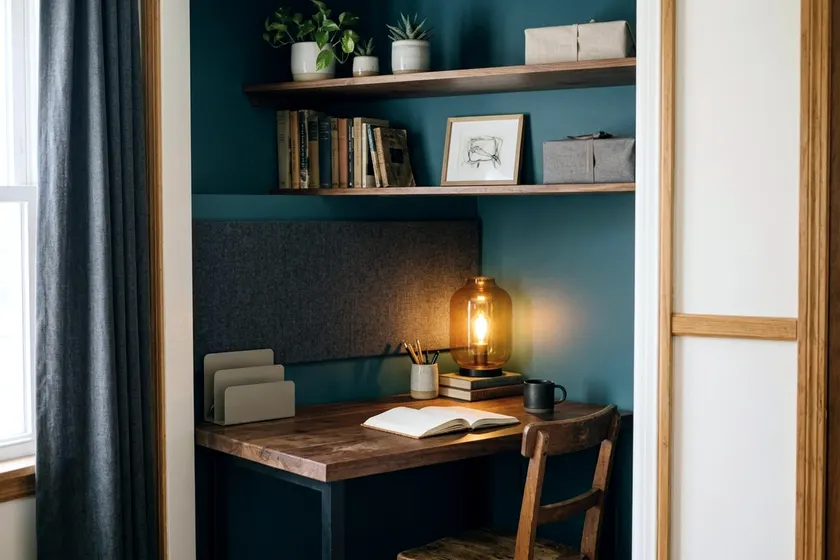
A good home office starts with a layout that puts daylight on your desk and keeps clutter out of your way. You can build a comfortable workspace in a spare bedroom or a tight alcove using basic tools and a few weekend hours.
1. Position your desk so daylight falls from the side
Natural light makes a long workday much easier. A window directly behind your screen can cause eye strain because your eyes struggle with the contrast. A window directly behind your office chair casts a dark shadow straight over your keyboard and paperwork.
The Occupational Safety and Health Administration recommends placing the face of the display screen at right angles to windows and light sources. This puts the daylight safely on your left or right side.
This layout gives you a bright workspace without the harsh glare reflecting off your monitor glass. You can enjoy the view outside simply by turning your head.
2. Hang the right blinds for the direction of the sun
Bright morning or afternoon sun can wash out your screen. A bare window leaves you squinting for hours. Your choice of window covering depends largely on which way the room faces.
OSHA says vertical blinds work best for east and west facing windows and horizontal blinds for north and south facing windows. Vertical slats let you block the low morning or evening sun while keeping some natural light in the room.
Horizontal slats do a better job managing the high midday sun. You can tilt them up to bounce the harsh light against the ceiling. This fills the room with soft ambient light instead of a blinding beam.
3. Face the center of the room instead of a blank wall
Most people push their desk straight against the nearest wall. This traditional setup leaves you staring at plain drywall all day. It makes a small spare bedroom feel cramped.
Pull the desk a few feet out into the room. Turn your office chair so your back sits near the wall and you face the doorway. You will feel less confined and gain a clear view of anyone walking into the room.
This floating layout also leaves the wall completely open. You can hang a large calendar, a whiteboard or heavy storage shelves right behind your seat.
4. Turn a standard closet into a built-in office nook
A standard reach-in closet makes an excellent hidden workspace. You can build a custom nook in an afternoon using a few pieces of lumber.
Take the closet doors off their hinges and store them in the garage. Remove the clothing rod and pry out the top shelf. You can then mount a thick piece of plywood or a solid wood slab straight to the wall studs to form a strong desk surface. Use heavy steel brackets for extra support.
Paint the inside of the closet a dark, rich color like navy blue or forest green. This defines the work area and separates it from the rest of the bedroom. Add a small battery-powered puck light under the remaining shelf to brighten the desk.
5. Mount a floating desk to save floor space in a corner
A bulky wooden desk eats up valuable floor space. That is a problem in a spare room that still doubles as a guest bedroom. A massive piece of furniture blocks walking paths and makes the room feel tiny.
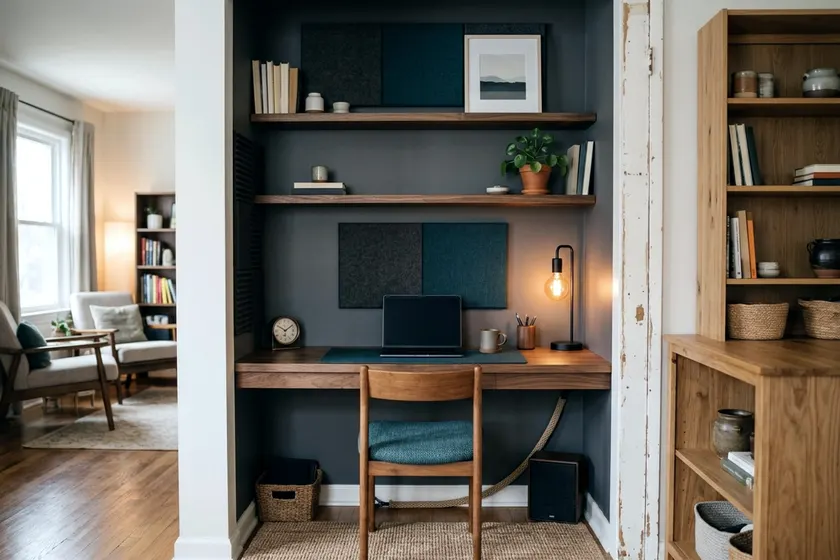
You can build a custom floating desk using heavy steel shelf brackets and a cut of thick butcher block countertop. Locate the wood studs in your wall using a simple stud finder. Secure the steel brackets directly into those studs with long wood screws, and check the bracket's rated load against the weight of the desk and your equipment.
A floating desk leaves the floor completely clear. You get plenty of legroom to stretch out during long phone calls. It also gives you a place to tuck a rolling file cabinet or a wastebasket completely out of sight.
6. Place task lighting to stop glare on your monitor
The main ceiling fixture rarely provides enough light for reading paper documents. A bright desk lamp solves this problem. You just have to position the lamp carefully so it illuminates your papers without blinding you.
OSHA advises positioning task lighting, such as a desk lamp, so the light does not reflect on the screen. A bright reflection can make small text hard to read and tire your eyes.
Place the lamp on the side opposite your dominant hand. This prevents your hand from casting a dark shadow over the page while you write.
7. Set your screen height to save your neck
A low monitor forces you to hunch forward to read your emails. This posture can lead to stiff shoulders and a sore neck. You need to raise the screen.
OSHA recommends placing the monitor so the top line of the screen is at or below eye level. You can use a wooden monitor riser to boost the screen up a few inches.
An adjustable metal monitor arm works even better. A sturdy arm clamps to the back edge of your desk and frees up valuable surface area. You can read about what height your desk should be to make sure the entire setup fits your frame.
8. Paint an accent wall behind you for a calm video background
A messy background distracts people on video calls. An unmade bed or a pile of laundry looks unprofessional. You want a clean, calm look behind your chair.
Paint the wall behind you a deep matte color. Dark greens, deep blues and soft grays look great on a webcam. These flat colors absorb harsh light and provide a professional contrast to your face. Apply two coats of paint to ensure a smooth finish.
Add a couple of wooden floating shelves to the painted wall. Display a few hardcover books or a small potted plant. Keep the arrangement sparse so it adds character without pulling focus from the conversation.
9. Run floating shelves straight up to the ceiling
A small office runs out of storage fast. The blank wall above your desk offers plenty of unused square footage. You can claim that space with some simple hardware.
Install standard wooden floating shelves from the desk surface straight up to the ceiling. Put your daily pens and paper on the bottom shelf where you can reach them from your chair.
Store old tax returns and rarely used electronics on the highest shelves. You can use matching cardboard boxes or canvas bins to hide small bits of clutter. This forces your storage to go vertical instead of spilling across the floor.
10. Hide trailing wires along the baseboard
Power cords, monitor cables and phone chargers look messy. A tangle of black wires under your desk also creates a serious tripping hazard when you stand up. A few minutes of work fixes most of it.
Mount a basic plastic surge protector to the underside of your desk using short wood screws. Plug your computer, monitor and lamps into this hidden strip.
Run a single heavy power cord down the back of a table leg. Use plastic zip ties to secure the wire tight against the leg. Route it along the baseboard to the nearest wall outlet. Stick adhesive plastic raceways over the baseboard to hide the main wire completely.
11. Put your printer and router on a rolling cart
A heavy laser printer takes up too much room on a standard desk. A bulky internet router and its power brick add to the mess. A small metal utility cart fixes both problems.
Place your printer on the top shelf of the rolling cart. Put your router, a stack of blank paper and extra ink cartridges on the bottom shelves.
You can wheel the cart into a closet when you want a clean room. Roll it right next to your chair when you need to print a large batch of documents.
12. Lay a thick rug to reduce room echo
Spare bedrooms often feature bare hardwood or cheap laminate floors. These hard flat surfaces bounce sound waves around the room. Your voice will sound hollow and distant to your coworkers on morning calls.
A thick wool area rug helps absorb sound and warms up the space. It can reduce the echo and makes the room feel finished. Leave a border of bare floor around the edges of the room to frame the rug.
Buy a hard plastic chair mat to sit over the fabric. This lets your office chair roll freely without wearing a hole through your new rug. It is also a cheap first step to soundproof a room you work in.
13. Add a heavy curtain to close off an open corner
A home office located in the corner of a living room or a basement needs a physical boundary. A boundary also helps you mark the end of the workday.
Mount a metal track to the ceiling and hang a heavy velvet curtain. This lets you close off the corner entirely. You can pull the thick fabric shut at five o'clock and hide your glowing screens from view.
A heavy curtain can also help block out some noise from the television or the kitchen while you work. It provides cheap privacy without the hassle of framing a new wall and hanging drywall.
14. Swap out the main room light for a warm fixture
Most homes come with a cheap flush mount ceiling light. The bright white bulbs cast flat, unpleasant shadows. They make your spare bedroom feel like a hospital waiting room.
Turn off the breaker at the electrical panel, confirm the power is off with a voltage tester, or hire a licensed electrician. Replace that generic fixture with a modern pendant light or a small chandelier. Install LED bulbs with a warm color temperature.
This soft, warm light makes the room feel comfortable during late evening work sessions. It can ease the harsh blue glow of your monitors. You can even install smart light switches or smart bulbs to dim the room right from your phone.
15. Install a solid core door to block household noise
Many interior doors consist of two thin pieces of wood glued over a cardboard honeycomb. They weigh little and often do little to stop noise.
If your spare room sits near a loud kitchen or a busy hallway, head to the lumber yard. Buy a solid core door. A heavy composite door can block voices, dog barks and television noise better than a hollow door.
You can replace the door yourself in an afternoon using a drill and a wood chisel. Simply copy the hinge locations from the old door onto the new one. This simple swap can help soundproof a door so you can focus.
Which upgrades to do first
Start with the layout. Moving your desk and adjusting your blinds costs nothing at all.
Focus on the lighting next. A cheap desk lamp and a warm ceiling bulb change the entire mood of a spare room. Once the light looks right, move on to shelves and hidden cable management to clear out the clutter.
Save the bigger jobs for last. Hanging a solid core door or wiring a new ceiling fixture takes a bit of planning and a free weekend.