Can a smart home energy monitor lower your electric bill
Find out how a smart home energy monitor can lower your electric bill by showing which appliances and daily habits use the most power.
Filed by Alex Whitcomb 8 min
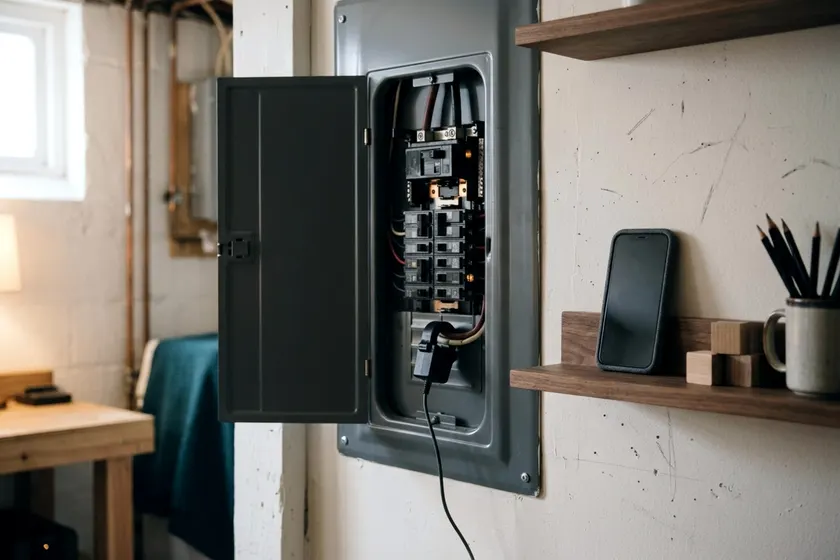
A smart home energy monitor can lower your electric bill, but the device itself does not save money. It simply shows you where your power goes. You use that data to turn off hidden energy hogs, spot failing appliances and shift heavy usage to cheaper hours.
What an energy monitor measures
Electricity enters your house through the main panel and travels to every outlet, switch and hardwired appliance. The utility tracks the total passing through the meter and bills you for that each month.
The US Energy Information Administration says the average US residential utility customer used 10,791 kWh of electricity in 2022, about 899 kWh per month. A standard monthly bill simply reports that total number. It does not show how much power the refrigerator used or what it cost to heat the garage.
An energy monitor breaks that total down. It measures the electrical current flowing through a specific wire. The internal software multiplies the current by the voltage to calculate the watts and kilowatts drawn at that exact moment. You view this data as a real-time graph on your smartphone.
Turn on a coffee maker and you see a sharp, sudden spike on the graph. Turn everything off and go to sleep, and you see a flat, continuous line at the bottom. This baseline represents the devices that stay powered on all night. Seeing these steady lines shows you what to unplug, replace or put on a timer.
Panel monitors against smart plugs
You can track your electricity at the main breaker box or at the individual wall outlet. Both approaches provide useful data for your home energy management system. They just measure the flow at different points in your electrical layout.
A whole home energy monitor lives inside your electrical panel. It uses sensor clamps that go around the thick main power cables feeding the breaker box and read the total electricity entering the house.
The main monitor connects to your Wi-Fi network and sends these continuous readings to a cloud server. Installing one means removing the metal panel cover and working near live, high-voltage parts, so hire a licensed electrician to put it in.
Once powered up, a panel monitor tries to identify individual appliances. The software looks for the specific electrical signatures of a refrigerator compressor, a well pump or an electric dryer. This recognition often works for large appliances with distinct, high-draw motors.
The system may struggle to identify smaller electronics or modern variable-speed air conditioners that ramp up slowly. Smart plugs are a simpler, safer alternative. You plug the smart plug into a standard wall outlet, then plug your appliance into it.
A power-monitoring smart plug measures only what passes through that single outlet. You can easily move the plug from room to room. This lets you test a television, a space heater or a window air conditioner, as long as the plug is rated for the appliance's load. Smart plugs suit standard 120-volt electronics and lamps within their rating.
You cannot use them for hardwired appliances or heavy 240-volt loads like an electric water heater, oven or central furnace. A whole home monitor delivers the complete picture of your electrical use. Smart plugs give detailed numbers for specific items. Many people use a panel monitor for the heavy lifting and a few smart plugs to track individual computers.
Find the devices that draw power all day
Many appliances consume electricity every minute they stay plugged in, even when you press the power button. They maintain a connection to your internet router, wait for a remote control signal or display a bright digital clock. This continuous, hidden draw is called standby power.
The Lawrence Berkeley National Laboratory says standby power amounts to 5% to 10% of residential electricity use. A home energy monitor helps you find the worst offenders in your rooms.
You start by looking at your home's baseline power draw in the middle of the night. If the graph shows a high number, you walk through the house and unplug devices until the line drops. Entertainment rooms and home offices are good places to start.
A television, a cable box and a video game console draw power while waiting for you to use them. So do a surround sound receiver, a computer monitor and a printer.
Newer electronics often waste less energy than old models. The Lawrence Berkeley National Laboratory says most products draw less than 0.5 watts in standby. Some older appliances and cheap electronics may draw more than that. Your energy monitor will show you exactly what your specific gear uses.
Once you identify the items pulling power all day, you can group them. Plug your computer monitors and printer into a single power strip. One switch then cuts the power when you finish working. You can also use a smart home hub to shut off your entertainment center at midnight and power it back up before you wake.
Use the data to shift or cut heating and cooling
Controlling your indoor temperature takes a lot of power. ENERGY STAR says almost half of a typical household's annual energy bill goes to heating and cooling, more than $900 a year. An energy monitor helps you manage this heavy, expensive load.
The monitoring app shows you exactly when your heating or cooling system turns on. You can see how long the system runs and how many watts it draws during a cycle. This data can show how changes to your thermostat affect your daily electrical cost. You might find that lowering the heat a little saves a measurable amount of money.
A monitor also helps you compare different heating strategies. You might compare an electric space heater in a spare room against the central furnace. A smart plug on the space heater gives you its wattage, which you can compare with the furnace draw on your whole home monitor.
Tracking your cooling equipment can also warn you of serious maintenance problems. A central air conditioner should pull a fairly consistent amount of power each time it cycles. If your energy monitor shows the system running longer than usual, it may point to a problem worth having an HVAC technician check.
The system might also draw a higher peak wattage to cool the same space. The air filter might need replacing, the coils might be dirty or the compressor might be failing. Catching the problem early can save electricity and may help you avoid a costly breakdown in the middle of summer.
Keep an eye on backyard offices and game rooms
If you run a backyard office or a detached garage game room, your power usage gets more complicated. These detached spaces may rely on mini-split heat pumps, dedicated window units, multiple computer screens and heavy power tools. It is easy to lose track of what these outbuildings cost to run.
A whole home energy monitor may be able to track the subpanel that feeds your detached building. Your electrician can clamp the sensors onto the feeder wires leaving the main house. The monitor treats the entire outbuilding as one distinct zone. You see exactly what your remote work setup or your weekend hobby costs in electricity.
If you run a space heater in a poorly insulated shed, the monitor graph can show a large spike that stays high for hours. Seeing the real cost of that heat might convince you to add insulation or seal the windows. The monitor turns vague assumptions into hard financial facts.
Shift heavy loads to cheaper hours
Some utilities offer time-of-use pricing plans. They may charge more for electricity during peak demand hours, which often fall in the late afternoon and early evening. Prices are often lower late at night and early in the morning, so check your own utility's rate schedule.
An energy management system tracks exactly when you use the most power. You can overlay this daily usage graph against your utility rate schedule. The data shows what running the clothes dryer at six in the evening really costs, and you can change your habits to match.
Delaying the dishwasher until the cheap overnight hours can cut the cost of the cycle on a time-of-use plan. Running a heavy pool pump early in the morning instead of the hot afternoon can save money, as long as it still runs long enough to filter the water. You can charge battery-powered yard tools at midnight. The monitor provides the immediate feedback you need to see these schedule changes lower your daily cost.
What savings to expect
Your savings depend on what you do with the data. The monitor itself draws a small amount of power, so to lower your bill you have to turn things off, adjust the thermostat or shift your schedule.
Your location also affects how much electricity you use. The US Energy Information Administration says Louisiana had the highest average annual use per residential customer in 2022 and Hawaii the lowest. The EIA figure does not say why, so treat it as a reminder that use varies widely by region. Homes with higher baseline usage may find more room to cut waste and lower their bills.
If you track down and eliminate a large phantom load in your home theater, you cut that waste immediately. Trimming part of the 5% to 10% standby share leaves some money in your pocket. If you optimize your heating and cooling schedule, you chip away at that expense of more than $900 a year. Finding a failing refrigerator or a stuck well pump before it runs up a massive bill can be one of the biggest payoffs.
The value is visibility, a clear graph of electricity that was invisible before. You can install smart light switches, unplug old electronics and tweak the central air conditioning with more confidence. The hard numbers show you what works and what simply wastes your money.